Currently Empty: R0.00

Reverse Osmosis Membrane Maintenance: The Complete Guide to Longer System Life
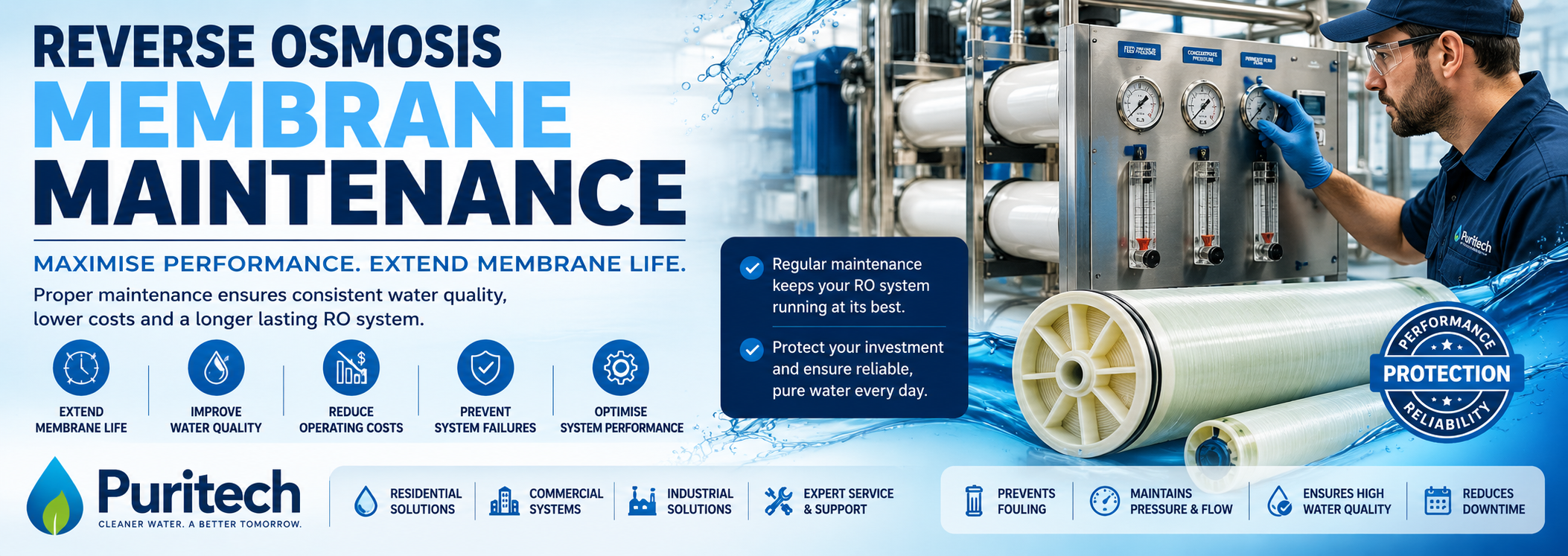
Reverse osmosis membrane maintenance is one of the most important aspects of keeping any water purification system operating efficiently. Whether you own a residential RO unit, a commercial water purification system, or a large industrial installation, proper maintenance helps extend membrane life, maintain water quality, reduce operating costs, and minimise unexpected downtime.
Many RO membrane failures occur long before the membrane reaches the end of its expected lifespan. In most cases, the cause is preventable. Poor pretreatment, incorrect operating conditions, inadequate cleaning, or delayed filter replacements can all shorten membrane life and reduce system performance.
This guide explains everything you need to know about reverse osmosis membrane maintenance, including how membranes work, what causes them to fail, how to identify early warning signs, and the maintenance routines that help maximise system efficiency.
What Is an RO Membrane?
The reverse osmosis membrane is the heart of any RO system. It is a semi-permeable membrane that allows water molecules to pass through while rejecting dissolved salts, heavy metals, bacteria, viruses, and many other contaminants.
Because the membrane performs the most important filtration stage, it must be protected from physical damage, scaling, chlorine, and biological contamination.
Without proper reverse osmosis membrane maintenance, even the highest-quality membrane can lose efficiency long before its expected service life.
Why Reverse Osmosis Membrane Maintenance Is So Important
Routine maintenance offers several important benefits.
It helps you:
- Extend membrane lifespan.
- Maintain consistent water quality.
- Reduce operating costs.
- Improve water recovery.
- Lower energy consumption.
- Prevent expensive repairs.
- Minimise production downtime.
- Protect other system components.
Most importantly, regular maintenance helps ensure your system continues producing water that meets your required quality standards.
How Does an RO Membrane Work?
An RO membrane contains microscopic pores that are small enough to allow water molecules to pass while blocking many dissolved contaminants.
To push water through the membrane, pressure is applied to the feed water. Clean water, known as permeate, passes through the membrane, while concentrated contaminants leave the system as reject water.
The membrane continuously removes contaminants, but over time deposits begin to build up on its surface. If these deposits are not removed, performance gradually declines.
The Four Main Types of Membrane Fouling
One of the most important aspects of reverse osmosis membrane maintenance is understanding membrane fouling.
1. Scale Fouling
Scale forms when dissolved minerals such as calcium carbonate, calcium sulphate, or silica precipitate onto the membrane surface.
Common signs include:
- Reduced water production.
- Increased operating pressure.
- Lower recovery rates.
- Higher energy consumption.
Proper pretreatment and antiscalant dosing can significantly reduce scaling.
2. Organic Fouling
Natural organic matter, oils, and other organic compounds can accumulate on the membrane surface.
This layer restricts water flow and creates an environment where bacteria may grow.
Activated carbon filtration and effective pretreatment help minimize organic fouling.
3. Biofouling
Biofouling occurs when microorganisms grow on the membrane surface.
It is one of the most difficult forms of fouling to remove and can spread rapidly if left untreated.
Regular sanitization and proper pretreatment are essential for preventing biofouling.
4. Particulate Fouling
Fine particles such as sand, silt, rust, and suspended solids can block membrane channels.
Installing high-quality sediment filters before the RO system greatly reduces this risk.
Daily, Weekly, Monthly, and Annual Reverse Osmosis Membrane Maintenance
A well-planned maintenance schedule is one of the best ways to extend membrane life and maintain consistent water quality. Instead of waiting for a problem to occur, regular inspections help identify small issues before they become expensive repairs.
Daily Reverse Osmosis Membrane Maintenance
Daily inspections only take a few minutes but provide valuable information about the health of your system.
Check the following:
- Feed water pressure
- Operating pressure
- Permeate flow rate
- Reject water flow
- Feed water temperature
- Conductivity or TDS readings
- System alarms
- Leaks around pumps and membrane housings
Record these readings in a maintenance log.
A gradual change over several days often provides the first warning that membrane fouling is beginning.
Weekly Reverse Osmosis Membrane Maintenance
Every week, perform a more detailed inspection.
This should include:
- Inspecting sediment filters
- Checking activated carbon filters
- Looking for unusual pump noise
- Inspecting pipework for leaks
- Checking valves and pressure gauges
- Cleaning external equipment
- Verifying automatic controls
Keeping equipment clean also makes leaks easier to detect.
Monthly Reverse Osmosis Membrane Maintenance
Each month, compare current operating data with the system’s original commissioning data.
Pay close attention to:
- Permeate production
- Salt rejection
- Pressure drop across the membranes
- Recovery rate
- Feed pressure
- Water quality
If performance begins declining, investigate the cause before permanent membrane damage occurs.
Annual Reverse Osmosis Membrane Maintenance
At least once each year, perform a complete system inspection.
Depending on operating conditions, this may include:
- Membrane performance testing
- Replacing pre-filters
- Inspecting pressure vessels
- Calibrating instruments
- Servicing high-pressure pumps
- Inspecting electrical components
- Reviewing operating records
Industrial facilities often perform these inspections more frequently.
How to Clean Reverse Osmosis Membranes
Even with excellent pretreatment, membranes eventually accumulate deposits.
Cleaning removes these deposits before they permanently damage the membrane.
Cleaning should never be delayed once performance begins to decline.
When Should an RO Membrane Be Cleaned?
Cleaning is generally recommended when:
- Permeate flow decreases by approximately 10–15%.
- Differential pressure increases significantly.
- Salt rejection decreases.
- Operating pressure rises.
- Water quality begins to decline.
Cleaning early usually produces better results than waiting until severe fouling develops.
Understanding Clean-in-Place (CIP)
Large commercial and industrial systems commonly use a Clean-in-Place (CIP) system.
A CIP system allows cleaning chemicals to circulate through the membranes without removing them from the pressure vessels.
Typical CIP equipment includes:
- Chemical tank
- CIP pump
- Cartridge filter
- Heater (optional)
- Hoses and valves
The cleaning solution dissolves scale, organic deposits or biological growth before being flushed from the system.
Choosing the Correct Cleaning Chemicals
Different types of fouling require different cleaning solutions.
| Fouling Type | Typical Cleaning Solution |
|---|---|
| Calcium scale | Acid cleaner |
| Iron deposits | Acid cleaner |
| Organic fouling | Alkaline cleaner |
| Biological fouling | Biocide (where membrane manufacturer permits) |
| Silica deposits | Specialised silica cleaner |
Always follow the membrane manufacturer’s recommendations. Using the wrong chemical or concentration may permanently damage the membrane.
Why Pretreatment Is Essential
The best membrane maintenance starts before water reaches the membrane.
Pretreatment removes contaminants that would otherwise foul or damage the membrane.
Common pretreatment equipment includes:
- Sediment filters
- Multimedia filters
- Activated carbon filters
- Water softeners
- Antiscalant dosing systems
- Cartridge filters
- UV sterilisation (for biological control in specific applications)
Proper pretreatment can significantly extend membrane life and reduce cleaning frequency.
Protecting RO Membranes from Chlorine
- One of the fastest ways to destroy a reverse osmosis membrane is chlorine exposure.
- Thin-film composite membranes are extremely sensitive to free chlorine.
- Even relatively low chlorine concentrations can permanently damage the membrane surface.
- Activated carbon filtration is commonly installed before the RO system to remove chlorine before it reaches the membranes.
- Routine chlorine testing should form part of every maintenance programme.
Monitoring System Performance
Successful reverse osmosis membrane maintenance depends on monitoring key performance indicators.
These include:
Feed Pressure
Unexpected increases may indicate fouling or blocked filters.
Differential Pressure
A rising pressure difference across the membranes usually indicates fouling.
Permeate Flow
Lower production often signals scaling or membrane blockage.
Salt Rejection
Declining salt rejection may indicate membrane damage or chemical attack.
Conductivity and TDS
Increasing conductivity in the permeate often means contaminants are passing through the membrane.
Routine monitoring allows operators to identify problems long before complete failure occurs.
When Should an RO Membrane Be Replaced?
Cleaning can restore membrane performance for many years.
However, no membrane lasts forever.
Replacement is usually recommended when:
- Cleaning no longer restores performance.
- Salt rejection falls below acceptable limits.
- Membranes become physically damaged.
- Production capacity remains significantly reduced after cleaning.
- The membrane reaches the manufacturer’s recommended service life.
Depending on water quality and maintenance practices, membranes often last between three and seven years, although actual lifespan varies by application.
Common Reverse Osmosis Membrane Problems
| Problem | Possible Cause | Recommended Solution |
|---|---|---|
| Low water production | Fouled membrane | Clean membrane |
| High operating pressure | Scaling | Perform chemical cleaning |
| Poor water quality | Damaged membrane | Replace membrane |
| High TDS | Membrane deterioration | Test membrane performance |
| Frequent fouling | Poor pretreatment | Improve pretreatment system |
| Chlorine damage | Carbon filter failure | Replace carbon media and membrane if necessary |
Common Maintenance Mistakes
Many membrane failures are caused by avoidable errors.
Avoid:
- Delaying filter replacement.
- Ignoring pressure changes.
- Operating without proper pretreatment.
- Allowing chlorine to reach the membrane.
- Skipping routine inspections.
- Using incorrect cleaning chemicals.
- Waiting too long before cleaning.
- Failing to keep maintenance records.
Small maintenance issues often become expensive repairs when ignored.
Frequently Asked Questions
How often should reverse osmosis membranes be cleaned?
Cleaning frequency depends on feed water quality, pretreatment effectiveness, and operating conditions. Systems processing difficult water may require more frequent cleaning than those treating high-quality municipal supplies.
Can an RO membrane be cleaned too often?
Yes. Unnecessary chemical cleaning may shorten membrane life. Clean only when performance indicators suggest fouling.
How long should an RO membrane last?
With proper reverse osmosis membrane maintenance, many membranes provide reliable service for several years. Actual lifespan depends on water quality, operating conditions, and maintenance practices.
Can chlorine damage be repaired?
Unfortunately, chlorine damage is usually permanent. Prevention through effective activated carbon filtration and regular chlorine monitoring is the best approach.
Is membrane maintenance different for residential and industrial systems?
The basic principles remain the same. However, industrial systems typically require more detailed monitoring, larger pretreatment systems, and scheduled Clean-in-Place procedures.
Final Thoughts
A reverse osmosis system is only as reliable as the condition of its membranes. By following a structured reverse osmosis membrane maintenance programme, monitoring performance, replacing pre-filters on schedule, and cleaning membranes before fouling becomes severe, you can improve water quality, reduce operating costs, and maximise the life of your investment.
Whether your system supplies purified water to a home, commercial facility, or industrial operation, routine maintenance is essential for consistent performance. If you’re unsure about your system’s condition or need expert advice, Puritech can assist with membrane assessments, servicing, and tailored water treatment solutions to help keep your RO system operating at its best.